
22 January 1970 · 6 min read
Virtual Try-On vs Size Guides: Why Size Guides Don't Work - And What Does
Size guides answer a measurement question. Customers are asking a fit and appearance question. That's why size guides haven't moved the needle on returns.
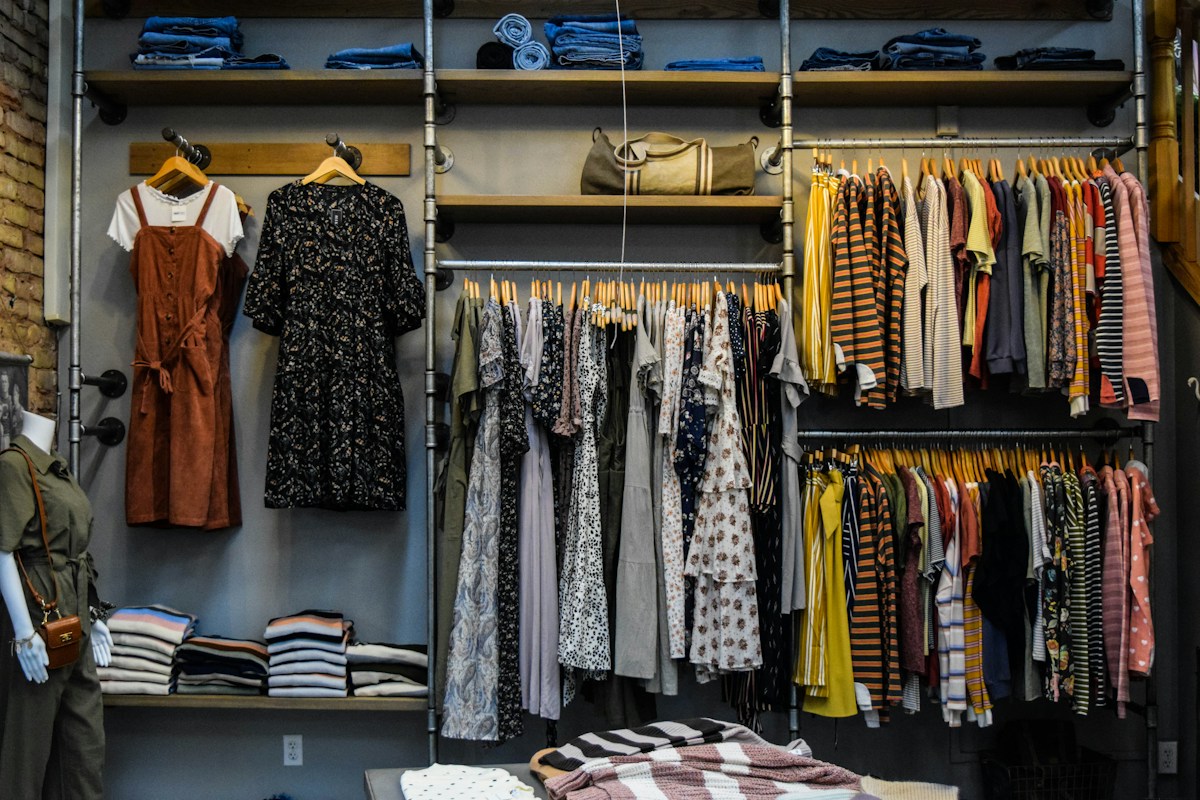
Size guides have been the fashion industry's standard response to the online fit problem for over two decades. They're on almost every fashion website. They're detailed, carefully maintained, and largely ignored.
The data is clear: despite universal adoption of size guides, fit remains the primary driver of fashion returns, accounting for 72% of items sent back. If size guides worked, that number would be lower. It isn't.
This isn't a failure of execution. Size guides are often meticulously accurate. The problem is structural - size guides ask customers to do something they can't reliably do, and they answer a question that isn't actually the question customers are asking.
What Size Guides Ask Customers to Do
A size guide typically asks a customer to measure their chest, waist, and hips - and sometimes their height, inseam, and shoulder width - and then match those measurements to a chart.
This sounds simple. In practice, it breaks down at almost every step.
Most customers don't own a tape measure. A surprising number of people genuinely don't have one at home, and fewer still have one to hand at the moment they're making a purchase decision.
Self-measurement is inaccurate. Even customers who do measure themselves frequently do it incorrectly - measuring over clothing, at the wrong position, at the wrong tension, or without a second person to assist with measurements like back width or inseam. Studies consistently find that self-reported measurements are off by 3–5cm on average, which is enough to put someone in the wrong size bucket.
Customers don't know which measurement is the limiting factor. Someone with a 94cm chest but a 62cm torso might need different sizes for the same garment depending on its cut. The size guide gives them a chest measurement recommendation, but that's not necessarily the measurement that will determine how the garment actually fits.
What Size Guides Answer vs What Customers Are Asking
Here's the deeper problem. When a customer looks at a garment and thinks "will this fit me?", they're not asking "what is the chest circumference of this garment at size medium?" They're asking a much more human question: "Will I look good in this? Will it feel comfortable? Will it be embarrassing if I wear this to the dinner on Saturday?"
Size guides answer a measurement question. Customers are asking a fit and appearance question. These are different questions, and they require different answers.
The measurement question has a rational, number-based answer. The fit and appearance question requires the customer to be able to visualise the garment on their body - to see the shoulder seam landing in the right place, the hem hitting at the right point, the fabric sitting the way they want it to.
Size guides cannot provide that. They provide data. Customers need confidence.
The Psychology of Purchase Uncertainty
Purchase uncertainty is the enemy of conversion and the mother of returns.
When a customer is uncertain about fit, they respond in one of three ways. They don't buy - they add to wishlist and wait until they can try it in a physical store, which may never happen. They order multiple sizes with the intention of returning most of them - which inflates return rates. Or they buy one size, hope for the best, and return it if it's wrong - which inflates return rates differently.
None of these outcomes are good for the brand. All of them stem from the same root cause: the customer can't visualise the fit, so they can't make a confident decision.
The solution isn't more measurement data. It's visual confidence.
What Virtual Try-On Provides
Virtual try-on with body measurement addresses the problem at the right level.
Instead of giving customers a table of numbers to interpret, it gives them a visual answer to their actual question. They upload a photo. The AI reads their body - 8 measurements derived from shoulder, chest, waist, hips, torso, arms, and inseam - and renders the garment on their body. They see the shoulders landing where they land. They see the hem sitting where it sits. They see the fabric draping as it drapes.
 GarmCheck
UI screenshotGarmCheck result - try-on image on left, measurements + size recommendation on right
Alongside the visual, they receive a size recommendation that isn't based on generic chart buckets but on their specific measurements mapped to the specific garment's size chart. If the garment runs small, the recommendation accounts for that. If the brand's medium has an unusual torso length, the recommendation accounts for that.
The result is a customer who is making a purchase decision based on information rather than hope. That customer is 27% more likely to buy. And when they do buy, they're dramatically less likely to return.
The Data Comparison
| Size Guide | Virtual Try-On | |
|---|---|---|
| Customer effort | High (measure, interpret chart) | Low (upload one photo) |
| Measurement accuracy | Low (self-measured, often wrong) | High (AI-detected from photo) |
| Answers appearance question | No | Yes |
| Accounts for garment-specific fit | Rarely | Yes |
| Impact on conversion | Neutral | +13–16% |
| Impact on fit returns | Minimal | −20–30% |
The Implementation Barrier Is Gone
For years, the reason fashion brands didn't move beyond size guides was simple: the technology required to do better was expensive and complex. Building a virtual try-on system required a large engineering team, proprietary model training, and significant infrastructure investment.
That's no longer true. The models are available via API. The body measurement layer runs in-browser. Implementation is a one-click install on Shopify, or a script embed on any other platform. There's no engineering required.
The question for fashion brands in 2025 isn't whether virtual try-on is better than size guides. It clearly is. The question is how quickly you implement it before your competitors do.
Ready to reduce returns?
Start your 14-day free trial
See GarmCheck on your own products. No credit card required.