
23 September 2026 · 5 min read
Retailers: Fit First AI Fashion Personalization with GarmCheck, No Code
A playbook for ecommerce teams to launch fit first AI personalization with minimal engineering. Run a 6–8 week pilot on 10–20 SKUs with GarmCheck.
Retailers: Fit First AI Fashion Personalization with GarmCheck, No Code
Four tactics drive most of the commercial return from AI fashion personalisation: fit-aware product recommendations, virtual try-on with size guidance, conversational styling, and personalised merchandising on the homepage and in email. Together, they move conversion, cut fit-related returns, and lift repeat purchase rate. If you’re deciding where to start, run a small pilot on fit and recommendations before touching anything else.
TL;DR:
- Prioritizing fit and size guidance pilots can significantly reduce return rates, as poor fit accounts for most fashion-related returns.
- Accurate product data tagging, including measurements and style attributes, is essential for the effectiveness of AI personalisation models.
- Virtual try-on tools installed directly on product pages offer the quickest improvement in both conversion and fit-related return reduction.
- Segmentation based on buyer behavior, not demographics, yields more relevant recommendations and improves overall AI personalisation results.
- Clear communication about privacy and recommendation basis boosts shopper trust and adoption of AI-driven features.
div style="border-radius:26px;padding:min(22px,3.2vw);background:radial-gradient(circle at 100% 0%,#f5f3ee 0 150px,rgba(255,255,255,0) 151px),radial-gradient(circle at 0% 100%,#f5f3ee 0 130px,rgba(255,255,255,0) 131px),linear-gradient(180deg,#f9f7f4 0%,#fcfbf9 100%);">
div style="background:#ffffff;border-radius:18px;box-shadow:0 12px 34px rgba(0,0,0,0.13);overflow:hidden;">
div style="padding:26px 28px 24px;background:radial-gradient(circle at 0% 120%,#38352d 0 170px,rgba(0,0,0,0) 171px),linear-gradient(180deg,#24221d,#100f0d);border-bottom:5px solid #cabfa2;">
div style="margin:0 0 18px;"> Garmcheck
Start With Better Fit Guidance
div style="font-size:15px;line-height:1.55;color:#64748b;margin:0 0 20px;">GarmCheck helps Shopify fashion brands show shoppers how garments fit and receive size recommendations from eight body measurements.
Explore GarmCheck
Table of Contents
- What AI fashion personalisation actually means for ecommerce teams
- High-impact AI tactics for fashion retailers
- Implementation roadmap: data, tagging and engineering checkpoints
- Designing trustworthy, usable personalised experiences
- Measuring impact: metrics and realistic benchmarks
- A practical pilot pattern: fit-first personalisation with GarmCheck
- Customer segmentation and behaviour analysis techniques
- Types of AI algorithms used in fashion personalisation
- Challenges and limitations of AI in fashion personalisation
- Ethical considerations beyond privacy
- Where AI fashion personalisation is heading next
- Start a fit-focused pilot with GarmCheck
- Sources
- FAQ
What AI fashion personalisation actually means for ecommerce teams
AI fashion personalisation is the use of machine learning, computer vision and customer data to match individual shoppers to garments, sizes and styles, rather than showing everyone the same catalogue in the same order. That’s a narrower and more useful definition than the generic “personalisation” most ecommerce platforms sell, because fashion carries three variables that grocery or electronics don’t: fit, style and occasion. A jumper that’s “recommended for you” based on browsing history is a weak signal. A jumper that’s flagged as the right size for your body shape, in a colour that matches your recent purchases, for the season you’re shopping in, is a different proposition entirely.
This is why fashion personalisation needs fit-aware and style-aware models, not the collaborative filtering that Amazon popularised for books and electronics. Collaborative filtering answers “what do people like you buy?” Fashion needs to answer “what fits your body and suits your taste?” Those require different data: body measurements, garment dimensions, fabric behaviour, and return history tagged by reason , not just by SKU.
Retailers that get this right tend to track a tight set of early indicators rather than a dashboard full of vanity metrics:
- Conversion rate on pages where personalisation is active versus a control group
- Return rate specifically tagged “wrong size” or “didn’t fit as expected”
- Average order value on personalised versus generic homepage variants
- Repeat purchase rate within 90 days of a personalised interaction
Get those four numbers moving in the right direction and the case for wider rollout makes itself.
High-impact AI tactics for fashion retailers
Not every AI feature earns its engineering cost. These five have the clearest line to revenue and margin, in roughly the order most retailers should consider them.
- Personalised product and outfit recommendations. The strongest signals aren’t just “viewed” and “purchased” — they’re return reason, size selected versus size kept, and style attributes (fit, silhouette, print) tagged at the SKU level. Placements that convert best sit on the product detail page (“complete the look”) and in post-purchase email, not just the homepage carousel. The conversion lever here is relevance density: fewer, better-matched suggestions outperform a wall of “you might also like” tiles.
- Virtual try-on and size recommendation. The workflow is simple in outline and hard in execution: a shopper uploads or selects a photo, the system maps body measurements, and it renders how a specific garment sits on that body and then recommends a size. This directly targets the single biggest driver of fashion returns, which is poor fit rather than poor taste. Retailers using virtual try-on and size recommendation tools report meaningful reductions in fit-related returns when the tool is placed on the product page, not buried in a size guide link nobody clicks.
- Conversational stylist and chat integrations. Zalando’s ChatGPT-powered assistant reads context, weather, occasion, current stock, and returns full outfit edits rather than a single item, pairing that discovery with stock alerts and social commerce to bring shoppers back. ASOS took a similar route, integrating its video and livestream content into an AI stylist inside ChatGPT so outfit discovery returns shoppable, visual results in real time rather than a wall of text. The friction point is almost always product data: a conversational layer is only as good as the structured metadata sitting behind it.
- Personalised merchandising and content. Homepage hero banners, email subject lines and shoppable video that shift based on browsing and purchase history outperform static campaigns, particularly when the underlying segmentation is behavioural rather than demographic. Shoppable video is the fastest-growing format here, largely because it lets AI-driven media surface directly inside conversational and search interfaces.
- Cross-channel orchestration. The best-performing setups sync signals like weather, device type and time of day across email, app and web, so a shopper browsing raincoats on a wet Tuesday sees that context reflected everywhere, not just on the page they happened to land on.
Pro Tip: Start with tactic two if returns are your biggest margin leak. Fit problems are the most mechanically fixable of the four, and the KPI (return rate) is unambiguous, which makes the pilot easy to defend internally.
Implementation roadmap: data, tagging and engineering checkpoints
Most fashion personalisation projects stall not because the AI is weak, but because the product data underneath it is thin. Before any model touches a shopper, audit what you actually hold: body measurement ranges from returns and try-on data, garment measurements per size, fabric composition, drape and stretch, and model attributes (height, size worn) tagged consistently across every SKU. Retailers who skip this step end up with a personalisation engine that’s technically live but functionally guessing.
Three integration paths cover most retailers:
- Plug-and-play widgets — a script tag or Shopify app that adds a feature (try-on, recommendations) without touching your codebase.
- API-based recommendations — a service you call from your existing storefront, giving more control over placement and logic.
- Headless snippets — for retailers running a decoupled frontend, integrated at the component level.
For most teams without a dedicated engineering bench, the plug-and-play route is the sensible starting point. It’s also where enterprise-grade AI capability has become available inside standard ecommerce platforms without needing a custom build.
Taxonomy matters more than most teams expect. A shared style vocabulary, consistent terms for fit (“relaxed”, “tailored”, “oversized”), consistent silhouette tags, consistent occasion labels, is what lets a recommendation engine or conversational stylist match a shopper’s stated preference to the right product. Inconsistent tagging is the single most common reason a personalisation pilot underperforms its own test data.
On privacy: cookieless personalisation patterns, where recommendations are driven by on-session behaviour and explicit inputs (a photo upload, a stated size preference) rather than persistent tracking, are increasingly the default rather than the exception. Clear data notices at the point of upload, particularly for body photo uploads, are not optional. A study of 375 online fashion shoppers found that trust deficit and perceived complexity actively suppress purchase intention, even when the underlying personalisation is accurate, which means a vague or missing privacy notice can quietly cancel out a well-built feature.
Design the pilot narrowly: pick one feature, one KPI, a holdout group of comparable size, and a rollout rhythm of two to four weeks per test cycle. Retailers who try to test five features simultaneously almost always end up with data too noisy to act on.
Designing trustworthy, usable personalised experiences
Shoppers judge AI-driven recommendations on two things: does the output look realistic, and does it look like them . A virtual try-on render that distorts body proportions or swaps out someone’s likeness for a generic mannequin-adjacent figure destroys trust faster than a wrong size ever would. Credibility cues, a visible confidence indicator, a note on how the measurement was derived, a comparison against a previous purchase, all help close that gap.
The same research on 375 shoppers found that exploratory and personal value drive intention to buy upward, but perceived complexity and trust deficit push it back down, with perceived risk acting as the mediating factor throughout. The practical takeaway: concise, on-path explanations, a single line explaining why this size or this outfit was suggested, consistently outperform either silence or an over-engineered settings panel.
Steerability matters as much as accuracy. Shoppers adopt personalisation faster when they can nudge it, loosen the fit, swap a colour family, override a size, rather than passively accept a black-box result.
A few UX defaults are worth locking in early:
- Make privacy settings visible and easy to opt down, not buried three menus deep.
- Offer a manual override on every AI-suggested size or style.
- Cover a genuinely inclusive size and body-shape range in your training and preview data, not just the mid-range sizes that are easiest to model.
- Show the confidence basis for a size recommendation in plain language, not a raw percentage.
Pro Tip: If you only add one explanatory microcopy line to your try-on or recommendation feature, make it explain the basis for the suggestion (“Based on your last two orders and body measurements”). That single line does more for adoption than any amount of backend accuracy tuning.
Measuring impact: metrics and realistic benchmarks
Four metrics matter more than any dashboard vanity number: conversion rate, average order value, return rate, and repeat purchase rate. Everything else, engagement time, click-through on recommendation widgets, chatbot session length, is a leading indicator, useful for diagnosing why those four are moving, but not a substitute for them.
Qualitative signals still earn their place. Engagement with a conversational stylist (completion rate of a style quiz, follow-up questions asked) and post-purchase fit ratings (“true to size”, “ran small”) both feed directly back into model tuning and catalogue tagging.
Structure the test properly: a holdout group that never sees the personalised feature, an attribution window long enough to capture the full purchase and return cycle (typically 30 to 45 days for fashion, given return windows), and a fixed pilot length rather than an open-ended “see how it goes.”
Metric What it tells you Typical pilot window Conversion rate (variant vs. control) Whether personalisation moves intent to purchase 12 weeks Return rate (fit-tagged) Whether size/fit guidance is working Full return cycle, 30–45 days post-purchase Average order value Whether outfit/cross-sell recommendations add basket value 12 weeks Repeat purchase rate Whether personalisation builds longer-term loyalty at least several weeks to months
Zalando’s approach is a useful reference point here: the retailer pairs its AI stylist with stock alerts and segmentation to drive measurable re-engagement, treating measurement as inseparable from the feature itself rather than an afterthought bolted on after launch.
A practical pilot pattern: fit-first personalisation with GarmCheck
Fit is the cleanest place to start a pilot because the KPI is unambiguous and the mechanism is well understood: poor fit accounts for the large majority of fashion returns , and fixing it doesn’t require touching your recommendation logic or your merchandising strategy.
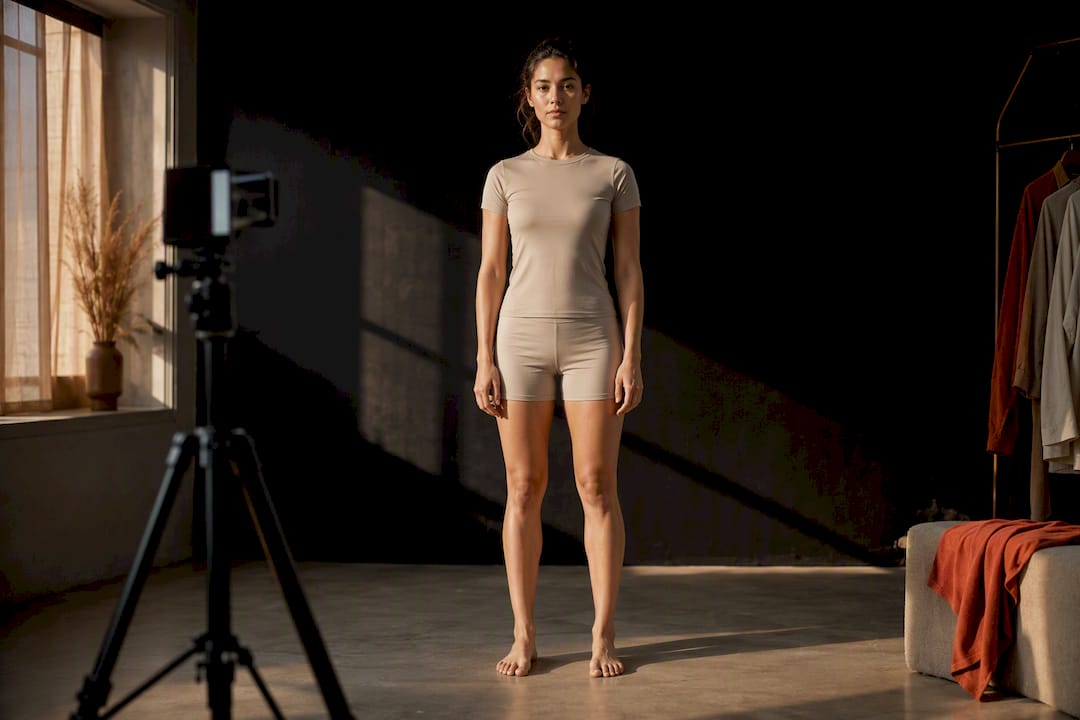
GarmCheck installs as an app or JavaScript snippet, suitable for teams without spare engineering capacity. A shopper uploads a single front-facing photo, and the tool generates a photorealistic image of how a specific garment fits their body in under ten seconds, alongside a size recommendation derived from multiple body measurements taken directly from that photo rather than inferred from order history.
A sensible pilot scope looks like this:
- Run it on your 10 to 20 highest-return product pages, not the full catalogue.
- Hold out a comparable control group of shoppers who don’t see the feature.
- Track fit-tagged return rate, conversion rate, and time-to-purchase over a six-to-eight week window.
The most common implementation pitfall isn’t technical, it’s placement. Burying a try-on link inside a size guide page gets a fraction of the engagement of putting it directly on the product page, next to the size selector, where the shopper is already making the decision it’s meant to inform.
Customer segmentation and behaviour analysis techniques
Effective fashion personalisation runs on segments built from behaviour, not just demographics. Age and location tell you almost nothing about whether someone prefers oversized tailoring or fitted knitwear; purchase history, return reasons and browsing patterns tell you a great deal.
The most useful segmentation axes for fashion retailers include:
- Fit profile — built from past size selections, return reasons, and anybody measurement data collected through a try-on tool.
- Style affinity — derived from browsing and purchase patterns across silhouette, colour and print attributes, not just category.
- Purchase cadence — how often and in what sequence someone buys, which flags high-value repeat shoppers separately from one-off discount hunters.
- Occasion context — inferred from timing and category (workwear browsing in January, occasionwear in June) rather than asked directly.
Behavioural clustering, grouping shoppers by what they actually do rather than who they claim to be, consistently outperforms static demographic segments in fashion because taste and fit needs don’t correlate neatly with age or income bracket. A 45-year-old and a 25 year old can have near-identical fit profiles and near-identical style preferences; a purely demographic segment would separate them anyway.
The practical trap is over-segmenting before you have enough volume per segment to personalise meaningfully. A segment of 200 shoppers isn’t large enough to justify a bespoke recommendation model. Start with three or four broad behavioural segments, fit profile, style affinity, purchase cadence, and occasion context, and only split further once each shows enough volume and enough divergence in outcome to justify the extra complexity.
Types of AI algorithms used in fashion personalisation
Three categories of algorithm do almost all the work in fashion personalisation, and each solves a different problem.
Machine learning models , typically collaborative filtering and gradient-boosted recommendation engines, power the “customers who bought this also bought” layer and the ranking logic behind personalised feeds. They’re the oldest and most mature part of the stack, and the easiest to bolt onto an existing ecommerce platform.
Computer vision is what makes virtual try-on and body measurement possible. It maps a photo to estimated body dimensions, then simulates how a specific garment’s fabric and cut will drape on that body shape. This is a materially harder problem than standard product recommendation, because it has to account for fabric behaviour (stretch, structure, drape) alongside body geometry, which is why fit-specific tools tend to outperform generic AI styling add ons.
Natural language processing underpins conversational stylists and chat-based shopping. NLP models parse a shopper’s stated intent (“something for a wedding, not too formal”) and match it against structured product attributes. ASOS’s integration is a clear example: making video and product data machine-readable is what lets an NLP-driven assistant return a specific, shoppable outfit rather than a vague text description.
Most mature personalisation stacks combine all three: ML for ranking, computer vision for fit, NLP for conversational discovery, layered on top of a shared product data foundation.
Challenges and limitations of AI in fashion personalisation
The biggest limitation isn’t the model, it’s the data feeding it. Sparse or inconsistent product metadata, missing fabric composition, absent fit descriptors, inconsistent size charts across brands, caps how well any recommendation or try-on engine can perform, regardless of how sophisticated the underlying algorithm is.
Cold-start is a persistent problem: a new shopper with no purchase history gives a recommendation engine almost nothing to work with, and a new SKU with no return data gives a fit model the same problem in reverse. Most retailers solve this with rule-based fallbacks (best-sellers, editorial picks) until enough behavioural data accumulates, but that transition period is where a lot of personalisation projects lose credibility with early users.
Perceived complexity is a real barrier to adoption, not just a UX nicety. The research on 375 fashion shoppers found that complexity and trust deficit actively work against purchase intention, meaning a technically accurate but confusingly presented feature can underperform a simpler, less precise one.
Seasonal and trend volatility is fashion-specific: a model trained on last season’s return data may misjudge fit or preference for a completely different cut of garment introduced this season. Retailers need a refresh cadence, not a “train once and leave it” approach.
Finally, integration cost is often underestimated. Even a plug-and-play widget needs clean product data behind it, and retailers who skip the tagging and taxonomy work up front tend to get mediocre results and blame the tool rather than the groundwork.
Ethical considerations beyond privacy
Bias in AI recommendations is a distinct problem from privacy, and it gets far less attention. A recommendation or fit model trained predominantly on data from a narrow size range or a narrow set of body shapes will perform worse, sometimes considerably worse, for shoppers outside that range. That’s not a hypothetical risk; it’s a direct consequence of training data composition, and it shows up as poor fit recommendations for plus-size or petite shoppers whose body shapes are underrepresented in the historical returns data most models are built on.
Style bias is subtler but just as real. If historical purchase data skews toward certain aesthetics, an AI stylist trained on that data will keep recommending those aesthetics to everyone, quietly narrowing what shoppers see rather than expanding it. That’s the opposite of what personalisation is supposed to do.
There’s also a fairness question in how AI-driven pricing and promotion personalisation gets used, showing different offers to different shoppers based on predicted price sensitivity sits in a genuinely grey area, even where it’s not showing different prices outright. Retailers should be able to explain, in plain terms, why two similar shoppers might see different content.
The practical fix isn’t complicated in principle: audit training data for size, body shape and style representation before launch, not after complaints arrive, and build in a manual override so a shopper can always correct or bypass a biased suggestion rather than being stuck with it.
Where AI fashion personalisation is heading next
Fit and size recommendation will become table stakes within the next 12 to 24 months, not a differentiator. Retailers who don’t offer some form of accurate sizing guidance will look dated next to those who do, in much the same way free returns became an expectation rather than a perk. Conversational styling is heading the same direction, particularly as more of it happens inside third-party interfaces like ChatGPT rather than on-site, which means product data readiness matters more than the styling interface itself.
For smaller teams, sequencing beats ambition. Fix fit first, because it has the clearest KPI and the most direct margin impact. Layer in recommendations second, once your product tagging is solid enough to support them. Save conversational and cross-channel orchestration for later, once you have the data volume to make them worth the build.
If you’re prioritising, work through this order: audit product data and tagging, pilot fit and size guidance on your highest-return SKUs, add recommendation logic once tagging is consistent, then extend into conversational and cross-channel features as volume justifies the investment. Enterprise-scale investment in orchestration and predictive segmentation makes sense once the fundamentals are proven, not before.
— Jack
Start a fit-focused pilot with GarmCheck
GarmCheck is the practical alternative to a custom-built try-on engine for retailers who don’t have spare engineering capacity to spend on this. Where a bespoke build can take months and a dedicated team, GarmCheck installs as a Shopify app, generating a photorealistic try-on render and a size recommendation from eight body measurements in under ten seconds, without any code.
A pilot typically runs on your highest-return product pages first, since that’s where fit fixes pay back fastest. You can start on the Free plan to test the mechanics, then move to Starter at £99 per month once you’re ready to scale across more SKUs, with Growth and Scale tiers available as try-on volume grows. In the first month, track fit-tagged return rate, conversion rate on pages with try-on active, and time-to-purchase against a holdout group.
See the virtual try-on product page for integration detail, or start your trial directly to see how it performs against your own catalogue.
Sources
- AI-powered personalization in online fashion stores: Exploring the impact on shoppers’ perceived risk and intention to buy and recommend
- Zalando’s AI-powered app: Fashion meets personalization
- ASOS launches AI Stylist on ChatGPT for instant outfit discovery
FAQ
What is AI fashion personalisation?
It’s the use of machine learning, computer vision and customer data to match shoppers to garments, sizes and styles based on their own body, behaviour and preferences, rather than showing every visitor the same catalogue. The strongest implementations combine fit-aware recommendations with conversational and merchandising layers.
Which AI personalisation tactic delivers the fastest ROI?
Virtual try-on and size recommendation tend to pay back fastest because fit is the leading cause of fashion returns, giving the pilot a clear, measurable KPI. Recommendation engines and conversational styling typically need more product data maturity before they show comparable results.
How much does a virtual try-on tool like GarmCheck cost?
GarmCheck offers a Free plan, a Starter plan at £99 per month, a Growth plan at £399 per month, and a Scale plan at £999 per month, depending on try-on volume and features. Current pricing details are listed on the GarmCheck site.
How long should an AI fashion personalisation pilot run?
Six to twelve weeks is typical for conversion and average order value metrics, but return-rate results need the full return cycle, usually 30 to 45 days after purchase, to read accurately. Repeat purchase rate needs at least 90 days to show a reliable signal.
Does AI personalisation increase the risk of biased recommendations?
Yes, if the training data underrepresents certain body shapes, sizes or aesthetics, the model will perform worse for shoppers outside that range. Auditing training data for representation and offering a manual override are the two most effective mitigations.
Recommended
- Fit Data First: Cookieless Personalization for Fashion Marketers
- Case Study: Halftone & Co. Cut Fit Returns by 19% with GarmCheck
- True fit alternatives for Shopify merchants: quick shortlist
- Virtusize alternatives for UK fashion retailers
Ready to reduce returns?
Start your 14-day free trial
See GarmCheck on your own products. No credit card required.